
1099 Filing Thresholds Have Changed Again for 2026: Is Your Business Ready?
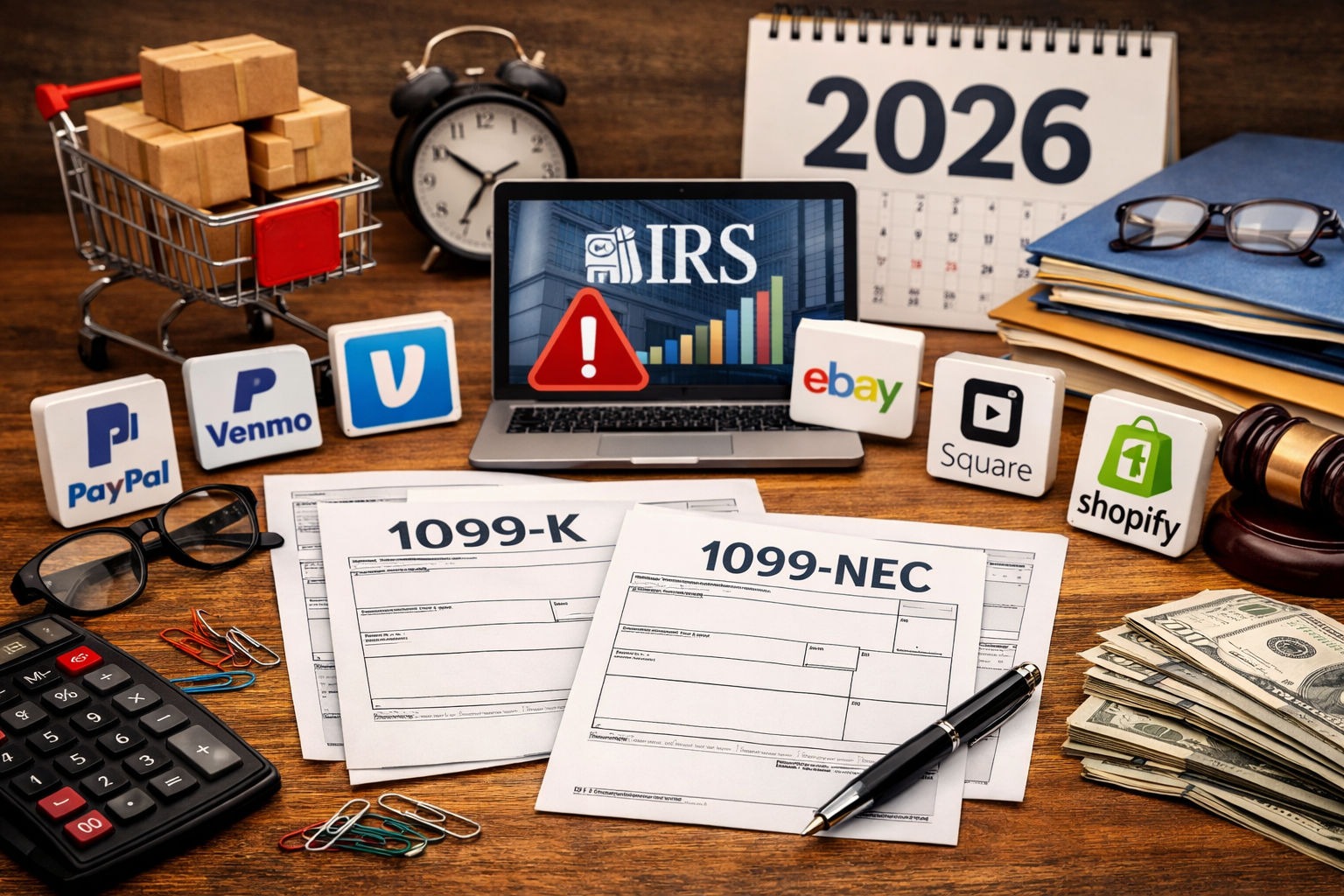
If your business works with freelancers, independent contractors, or receives payments through platforms like PayPal, Venmo, Square, Etsy, eBay, or Shopify, the 2026 rules could significantly impact you.
The IRS has fully lowered 1099 reporting thresholds, meaning more businesses must file forms and more taxpayers will receive them than ever before. Waiting until January to address this often leads to last-minute stress, filing errors, or costly penalties.
At Genovations Accounting, we help business owners stay ahead of IRS changes, so you can focus on running and growing your business with confidence.
Why 1099 Forms Matter
Form 1099 isn’t just paperwork. It’s how the IRS tracks taxable income paid to contractors and processed through payment platforms.
Failing to issue or file required 1099s can result in:
Penalties for late, missing, or incorrect forms
Increased risk of IRS notices or audits
Strained relationships with contractors and vendors
Getting it right and on time, protects both your business and the people you work with.
What’s Changing in 2026
The biggest change is to Form 1099-K.
1099-K Threshold (Fully Phased In)
New threshold: $600 total payments annually
No transaction minimum
If you receive more than $600 through payment platforms like PayPal, Venmo, Square, Etsy, eBay, or Shopify, you should expect to receive a 1099-K, even if you never did before.
Other Key Rules That Still Apply
1099-NEC: Required for payments over $600 to freelancers or independent contractors.
State rules: Some states have different or lower thresholds state compliance still matters.
Duplicate reporting must be avoided: The IRS wants income reported once, not multiple times.
How to Track and Prepare for 1099 Filing
With lower thresholds, accurate tracking is more important than ever. We recommend:
Collecting W-9s upfront from all contractors and vendors
Tracking payments by vendor and by payment method, not just totals
Using accounting software like QuickBooks or Xero to automate 1099 tracking
Reconciling payment platforms to bank statements monthly, not at year-end
Understanding payment types ACH, credit cards, and platforms are reported differently
Proper setup now prevents duplicate forms and IRS mismatches later.
Common 1099 Mistakes to Avoid
We see these issues every year:
Missing the January 31 filing deadline
Issuing both a 1099-K and 1099-NEC for the same payment
Using outdated or incorrect vendor information
Assuming all platforms issue forms automatically (some don’t)
Even when a platform doesn’t issue a form, income is still reportable.
The Genovations Accounting Approach to 1099 Compliance
We make 1099 season simple and stress-free:
Early review of vendors and payment activity to identify 1099 triggers
Automated 1099 preparation and e-filing
Compliance with both federal and state requirements
Did You Know?
The IRS increasingly uses automated systems to flag mismatches between income reported on tax returns and information returns like 1099s. Clean records and accurate filings reduce red flags before they start.
Stay Ahead of the IRS in 2026
The 2026 “1099 rules” impact nearly every small business that works with contractors or accepts online payments.
Book your 1099 Readiness Review today
Book a free 30-minute Consultation with Genovations Accounting
Let’s make your next filing season smooth, accurate, and penalty-free.
